

A Life
in Resistance
Dietrich Bonhoeffer was born on February 4, 1906, in Breslau, the sixth of eight children. His parents were the renowned psychiatrist and neurologist Karl Bonhoeffer and Paula Bonhoeffer, née von Hase. In 1912, the family moved to Berlin, where Bonhoeffer spent his school years and graduated in 1923. In the same year, he began studying Protestant theology in Tübingen in the summer semester.
A formative stay in Italy from April to June 1924 broadened his cultural and theological horizons. Subsequently, Bonhoeffer continued his studies in Berlin. His exceptional academic talent was evident early on: in 1927, he earned his doctorate with the work Sanctorum Communio. In January 1928, he passed the First Theological Examination and began a vicarage in Barcelona in February.
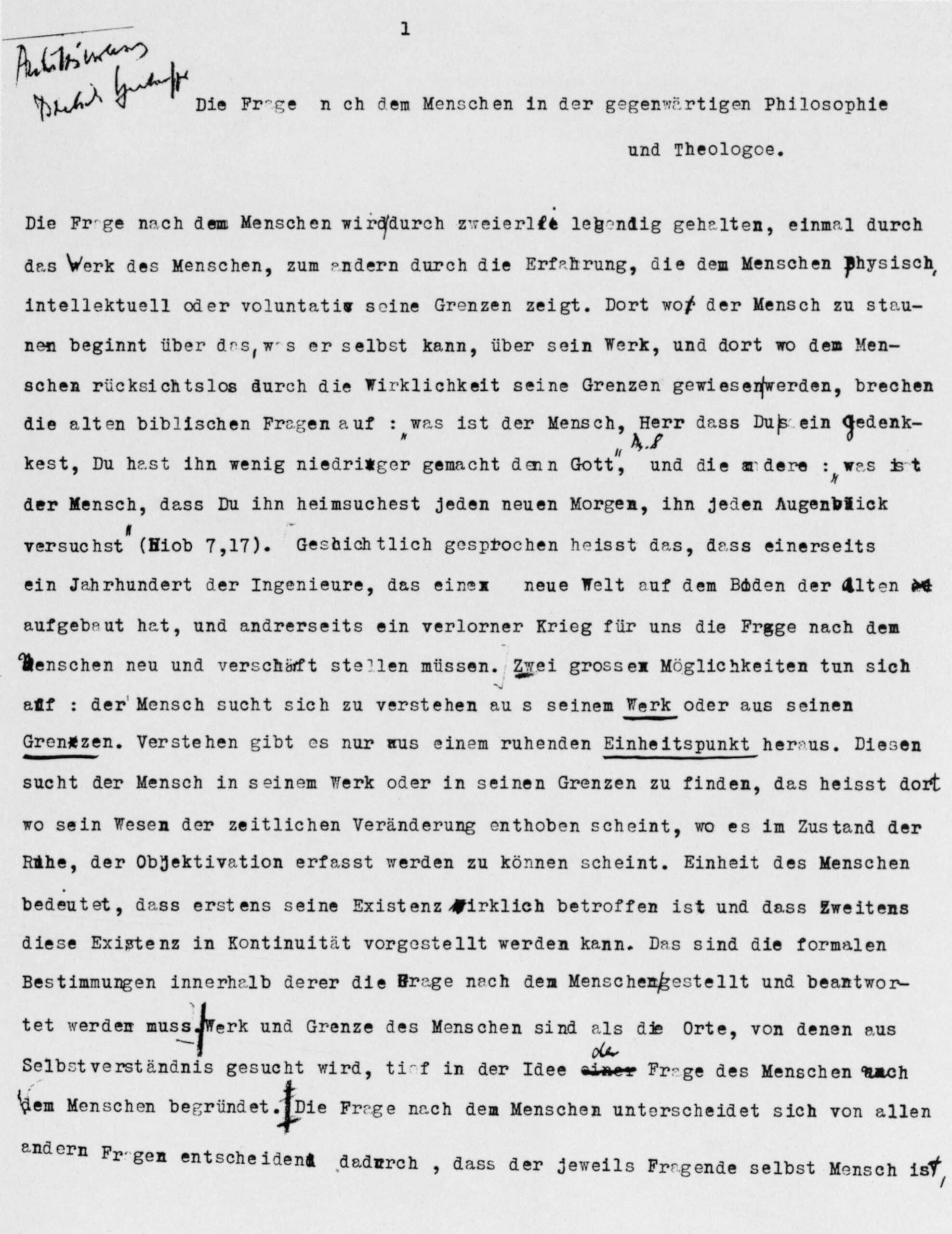
After his return, Bonhoeffer worked as an assistant at the Theological Faculty in Berlin in 1929 and 1930. In July 1930, he completed his habilitation with the writing Akt und Sein and the Second Theological Examination. From September 1930 to June 1931, he stayed in New York for study purposes.
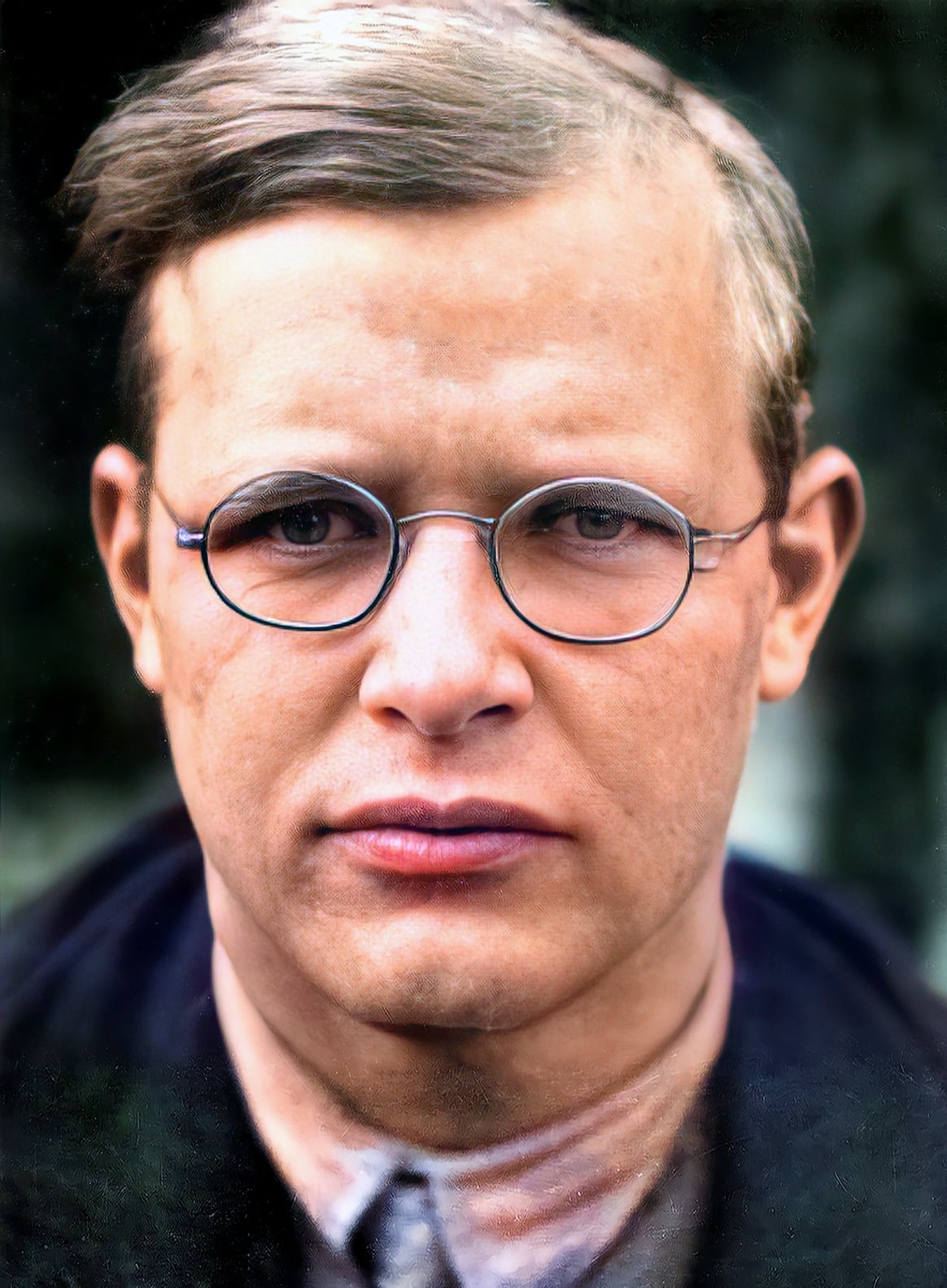
In September 1931, Bonhoeffer was elected youth secretary at an ecumenical conference in Cambridge. From October of the same year, he worked in Berlin as a private lecturer and student pastor at the Technical University, a position he held until 1933. In November, he was ordained as a pastor and additionally supervised a confirmation group in northeast Berlin for half a year. In the following years, Bonhoeffer remained internationally ecumenically engaged, including through participation in conferences in Geneva and Gland in the summer of 1932.
The year 1933 marked a profound turning point. While Bonhoeffer's writing Schöpfung und Fall was published, Adolf Hitler seized power on January 30. As early as February 1, a radio lecture by Bonhoeffer on the concept of the Führer was prematurely terminated. In the following months, he positioned himself decisively against the National Socialist church policy, including with the lecture Die Kirche vor der Judenfrage and the leaflet Der Arierparagraph in der Kirche. Together with Martin Niemöller, he was involved in the preparations for the founding of the Pastors' Emergency League, which became the nucleus of the Confessing Church. From October 1933, Bonhoeffer took over a parish in London, which he held until 1935.
Even after his return to Germany, Bonhoeffer remained internationally connected. In 1934, he participated in the ecumenical conference in Fanø, Denmark, where he advocated for a theologically based peace policy and became a member of the World Council of Churches. From April 1935, he led a preachers' seminary of the Confessing Church, initially in Zingst and later in Finkenwalde near Stettin, while also teaching at the University of Berlin.
In 1936, a study trip to Denmark and Sweden was made possible for the preachers' seminary, but in August, Bonhoeffer's teaching license at the university was revoked. A year later, his writing Nachfolge appeared, and at the same time, state pressure intensified: after the arrest of Martin Niemöller in July 1937, the preachers' seminary was closed by the police in October. Bonhoeffer continued the training in the form of collective vicarages in various locations and lived temporarily in Schlawe.
From 1938, Bonhoeffer received a residence ban for Berlin and increasingly established contacts with the political resistance. At the beginning of 1939, Gemeinsames Leben appeared. To avoid the impending conscription into military service, Bonhoeffer traveled to the USA in June 1939 for a teaching position, but returned to Germany for reasons of conscience as early as the end of July. With the beginning of the Second World War on September 1, 1939, a new phase of his life began.
From 1940, Bonhoeffer was involved in conspiratorial resistance work and worked as an employee in the Foreign Office/Defense Office. At the same time, he worked on his Ethics. During this time, he lived in various places in Germany. In 1941, he received a publication ban, but made several trips to Switzerland as a courier of the resistance and was involved in a rescue operation for Jewish persecutees.
In 1942, Bonhoeffer continued his resistance activities, including through trips to Norway, Italy, and again to Switzerland, as well as through contacts with the Kreisau Circle and Bishop George Bell. On January 13, 1943, he became engaged to Maria von Wedemeyer. A few months later, on April 5, 1943, Bonhoeffer was arrested in his parents' house in Berlin and taken to the Tegel military prison.
During his imprisonment, Bonhoeffer developed new, far-reaching theological ideas about the church, the world, and faith in letters and notes. After the failed assassination attempt on Hitler on July 20, 1944, his situation worsened drastically. In October 1944, he was transferred to the Gestapo cell in Prinz-Albrecht-Straße. At the turn of the year, he wrote the poem From good powers faithfully and silently surrounded there.
In February 1945, Bonhoeffer was transferred to the Buchenwald concentration camp and transported further at the beginning of April, most recently to the Flossenbürg concentration camp. On April 5, the order for his murder was issued. On April 9, 1945, Dietrich Bonhoeffer was executed after a nocturnal drumhead court-martial for high treason and treason against the state. A few weeks before the end of the war, a large part of his family also lost their lives through the Nazi regime. Bonhoeffer is still considered one of the most impressive theological and moral figures of the German resistance against National Socialism.

Publication
on the subject
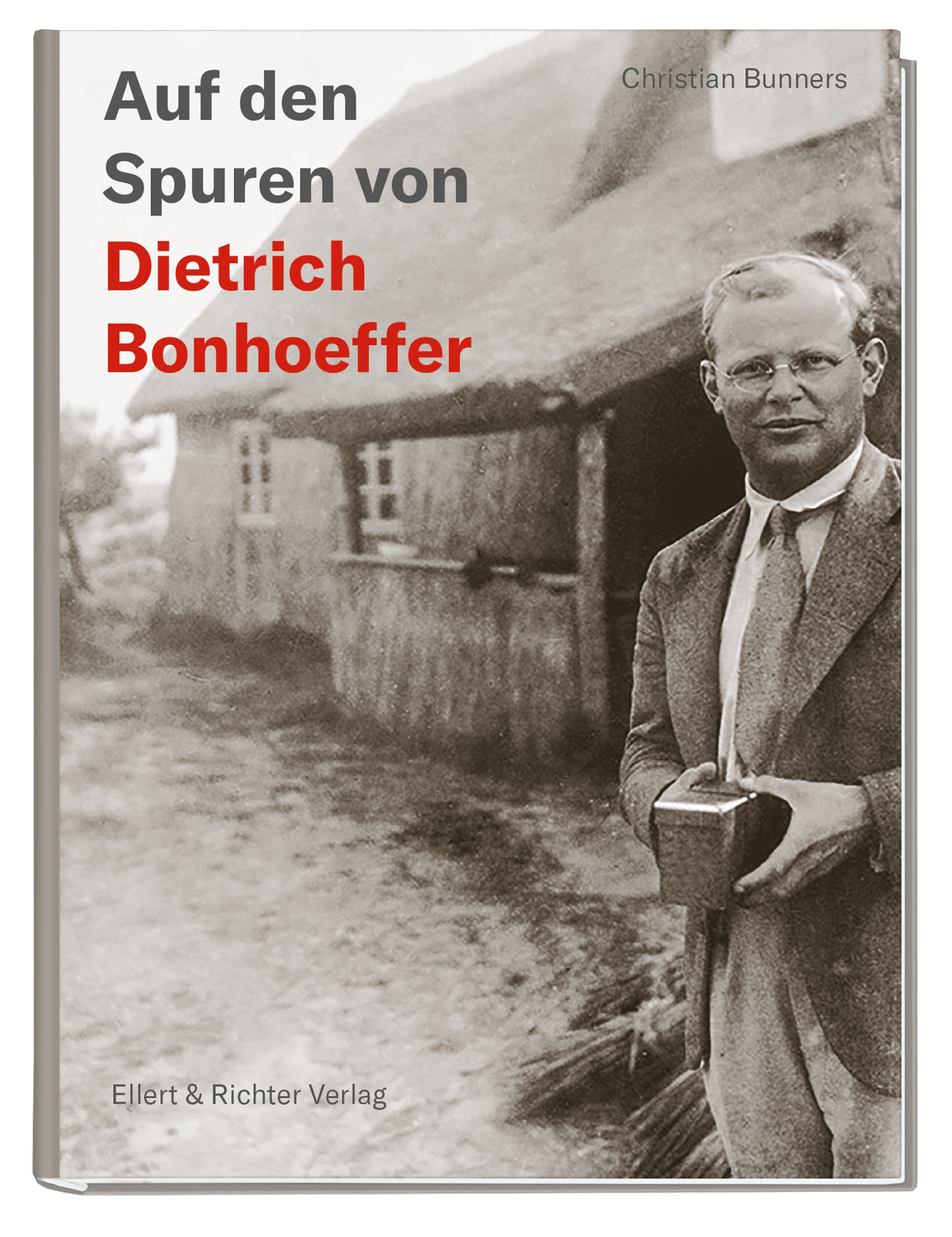
An interesting new publication about the life and work of Dietrich Bonhoeffer has recently been published by Ellert & Richter Verlag, Hamburg. We recommend this book to our guests for further reading. It is available at our reception for the shop price of 19.90 euros.
We thank the copyright holder for providing the texts and image data.
Bonhoeffer’s Life
in Stages
Breslau – Berlin
Born on February 4 as the sixth of eight children.
Italy
Formative stay in Italy from April to June. Broadening of the cultural and theological horizon.
Berlin
Doctorate with the work Sanctorum Communio.
Berlin
Completion of the first Theological Examination in January 1928; commencement of a vicarage in Barcelona in February.
Berlin, New York
Assistant at the Theological Faculty in Berlin between 1929 and 1930; July 1930 habilitation with the writing Akt und Sein; Second Theological Examination; September 1930 to June 1931 studies in New York.
Cambridge, Berlin
Elected youth secretary in Cambridge in September 1931. From October to 1933 private lecturer and student pastor in Berlin.
Profound Turning Point
Bonhoeffer's writing Schöpfung und Fall appears, Adolf Hitler seizes power on January 30.
Bonhoeffer positions himself decisively against the National Socialist church policy; From October 1933 parish in London (until 1935).
1934 ecumenical conference in Fanø/Denmark; Member of the World Council of Churches; From April 1935 Head of the Preachers' Seminary of the Confessing Church; Teaching at the University of Berlin.
Withdrawal of the teaching license at the university; Writing Nachfolge appears; 1937 arrest of Niemöller, closure of the preachers' seminary.
Residence ban for Berlin; Contacts with the resistance; Publication Gemeinsames Leben; September 1, 1939 Beginning of the Second World War.
From 1940 conspiratorial resistance work; Work on Ethik; 1941 publication ban; Engagement to Maria von Wedemeyer on January 13, 1943; April 1943 arrest and admission to the Tegel military prison.
Berlin – Buchenwald – Schönberg
October 1944 transfer to the Gestapo cellar, Prinz-Albrecht-Straße; Poem Von guten Mächten treu und still umgeben is created.
February 1945 transfer to the Buchenwald concentration camp; April transfer to Flossenbürg concentration camp; April 9, 1945 execution for high treason and treason against the state.
From good forces faithfully and quietly surrounded
Dietrich Bonhoeffer (1906 – 1945)